Executive Summary & Key Highlights
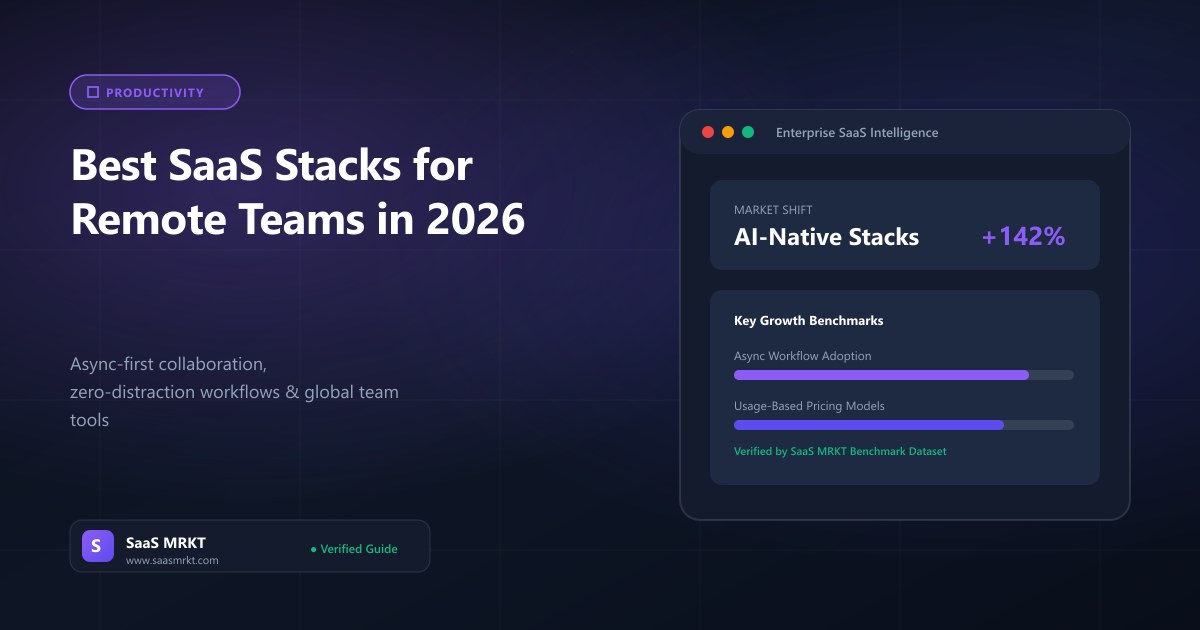
Working across time zones doesn't have to mean lost productivity. These async-first SaaS tools are transforming how distributed teams collaborate.
Remote Work in 2026: The New Normal Matures
Three years after the remote-first revolution, organizations have learned hard lessons about what works. The teams thriving in 2026 aren't just using video calls and shared documents — they've architected SaaS stacks specifically optimized for async-first, high-trust collaboration.
The Core Remote SaaS Stack
Communication Layer
Async-first communication is the key insight. Synchronous tools (video calls, instant messaging) should be used sparingly and intentionally.
- Primary async: A structured documentation tool (Notion, Confluence) where decisions and context live permanently
- Quick sync: Slack or Teams for real-time collaboration when needed
- Deep work protection: Tools like Reclaim.ai or Clockwise that auto-schedule focus blocks
Project Coordination Layer
For distributed teams, project management needs to be ruthlessly transparent. Every task needs clear ownership, deadlines, and visible progress.
TaskFlow's async mode provides daily digest emails instead of live notifications, reducing the always-on pressure that leads to burnout in remote environments.
Documentation & Knowledge Management
Remote teams lose enormous productivity to undocumented knowledge. Invest in:
- A company wiki that's actively maintained
- Video walkthroughs for complex processes (Loom)
- Searchable meeting transcriptions
Hiring & HR for Remote Teams
Managing payroll, compliance, and benefits across multiple countries requires specialized tooling. Manage360's multi-country payroll engine handles 42 jurisdictions and integrates with benefits providers in each market.
The Anti-Patterns to Avoid
- Tool sprawl: Having 15 tools when 6 would suffice creates context-switching overhead
- Meeting creep: Defaulting to meetings instead of documented decisions
- Timezone-blind scheduling: Rotating meeting times so no one always gets the inconvenient slot
- No documentation culture: Expecting tribal knowledge to transfer in a distributed team
Building Your Remote Stack on SaaS MRKT
Use SaaS MRKT's category filter to explore tools specifically optimized for remote and distributed teams. Look for tools with robust async notifications, timezone settings, and permissioning models.